
Last Christmas I bought myself a fancy new Yaesu FT2DR HT with C4FM, GPS, Wires X and APRS. After the rebate this little beauty came in at over $350.
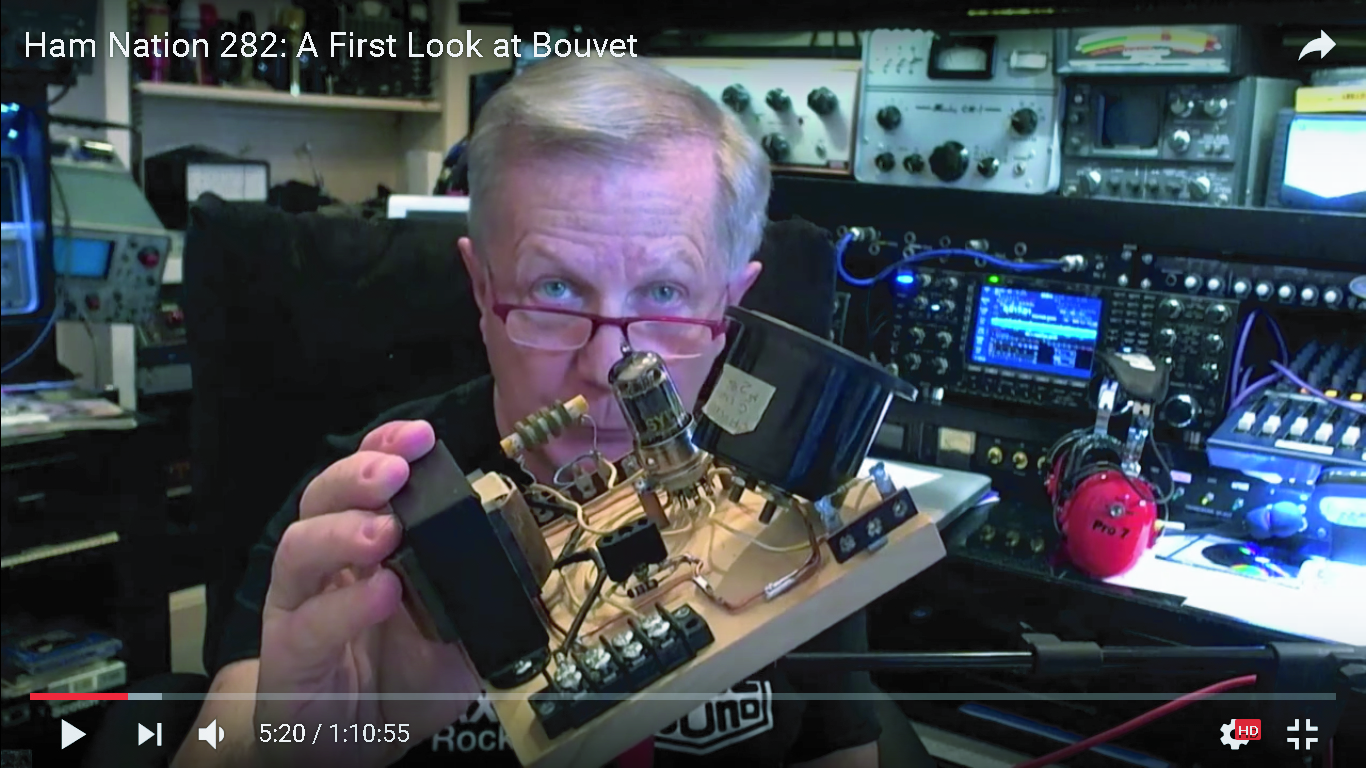 At the time, I was also in the process of building Bob Heil's Pine Board Project, a "simple" classic elctronics build which was faetured on the cover of January's QST magazine after gaining attention via the popular Ham Nation weekly internet broadcast. I put "simple" in quotes here because this little adventure seemed deceptively so to me when I vowed to take it in January of 2017. On Ham Nation one Wednesday night Bob held up a little AM transmitter built with a couple tubes and a coil stuck on a scrap of wood. He promised to take viewers through building this little project later in the year. "I'm going to build that," I told myself. It turned out that in the spring when Bob finally embarked on the project that it was part of a series of smaller and progressively more difficult modules which I would cautiously work my way through, all the while paying careful attention to copious warnings about working with high voltage.
After going to Dayton Hamvention in May of last year I was inspired to start what was being called "The Pine Board Project" and I thought, "Oh, I'll just scrape together some old parts I find at hamfests this summer." Easier said than done. While some participants had the stuff built practically before Bob did, all with parts and knowledge they had accunulated from a lifetime in electronics, I realized quickly that there was more to this than met the eye. I was starting from nothing in aquisition of both parts and knowledge.
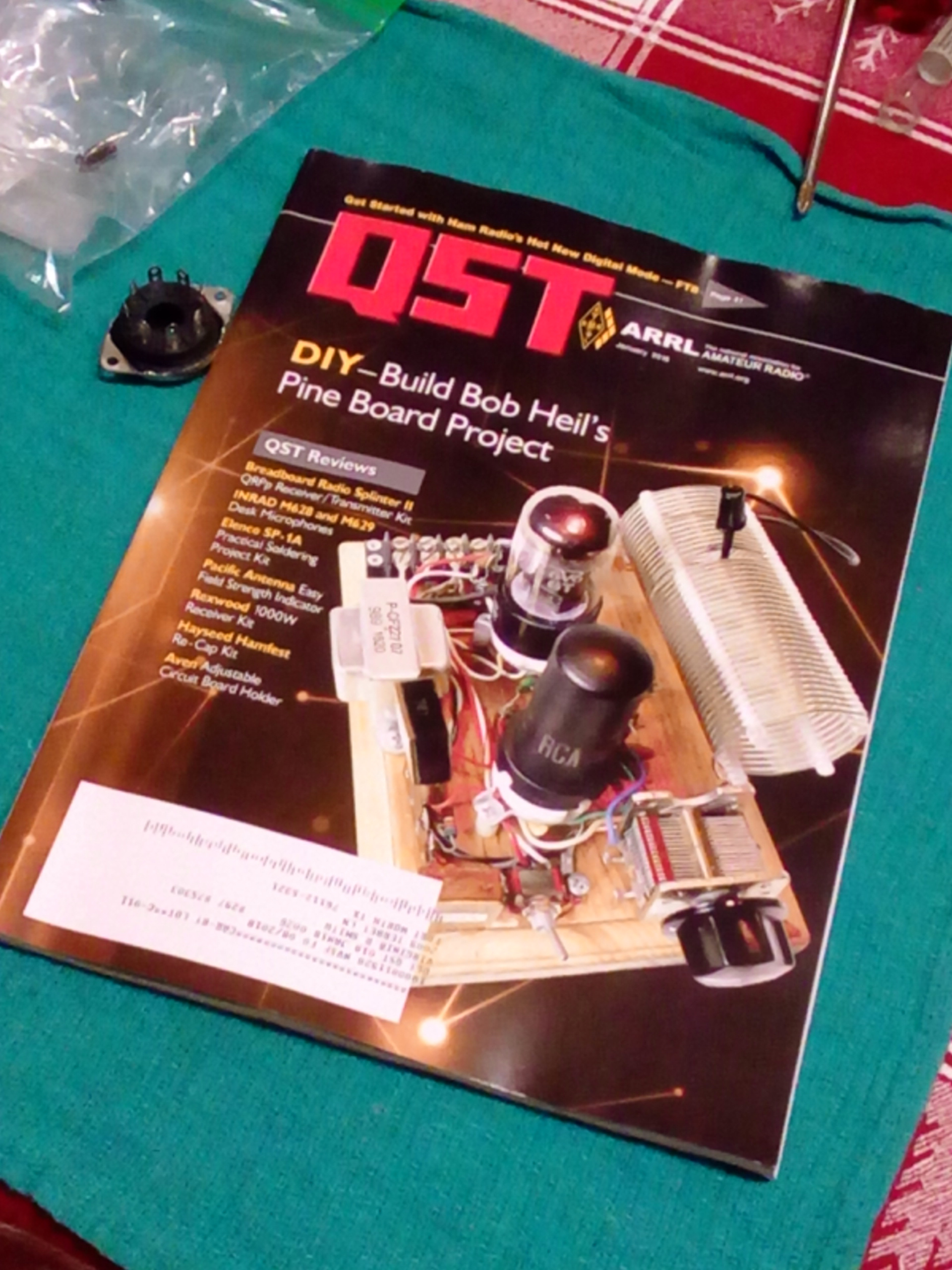 In the coming months the Pine Bpard project would become a sensation among hams wanting to learn to build or to rekindle the good old days of homebrewing. It was featured on the January 2018 cover of QST magazine. As soon as I found out that was happening, I went online and bought all my parts. And sure enough in January there was a run on parts, and some of them, like a 2.5 mH choke became somewhat difficult to locate. Amazingly, tubes and crystals are not too difficult to acquire, while some parts, like the Hammond transformer for the power supply are not cheap at all!
And now - more than a year after starting this - I have a drawer full of "junk," some of which I acquired in ignorance, hoping I was getting the right thing. Then there was stuff well-meaning friends gave me, much of which wasn't quite what I needed either (though I'm sure I can use it later for something else!), not to mention all the duplicate parts (because you can rarely buy just one of something small like a resistor or ceramic capacitor). Then there were the parts you bought before the project evolved right before your eyes from a little one tube job to a thing with two bigger tubes and three crystals and a band switch and an antenna relay, and found yourself with three or four tubes you didn't end up needing. Or you needed a few feet of wire, but you had to buy a spool, and not in just one color because you have to be able to tell things apart. So at least four colors is helpful.
Some of the project came in a partial (very partial) kit from Antique Electronics Supply. And instructions were supplied via very thorough diagrams and the series of pine board video segments from Ham Nation, all nicely compiled on the Heil Sound website. (But there were no step by step construction or testing instructions.) However, Bob Heil has even made himself available for questions via email. He and I have even had a couple of phone calls. (I must soon write about all he personally has done for me in this process.) But even he is just one little guy who can only do so much. So for most of this adventure I have felt very much on my own.
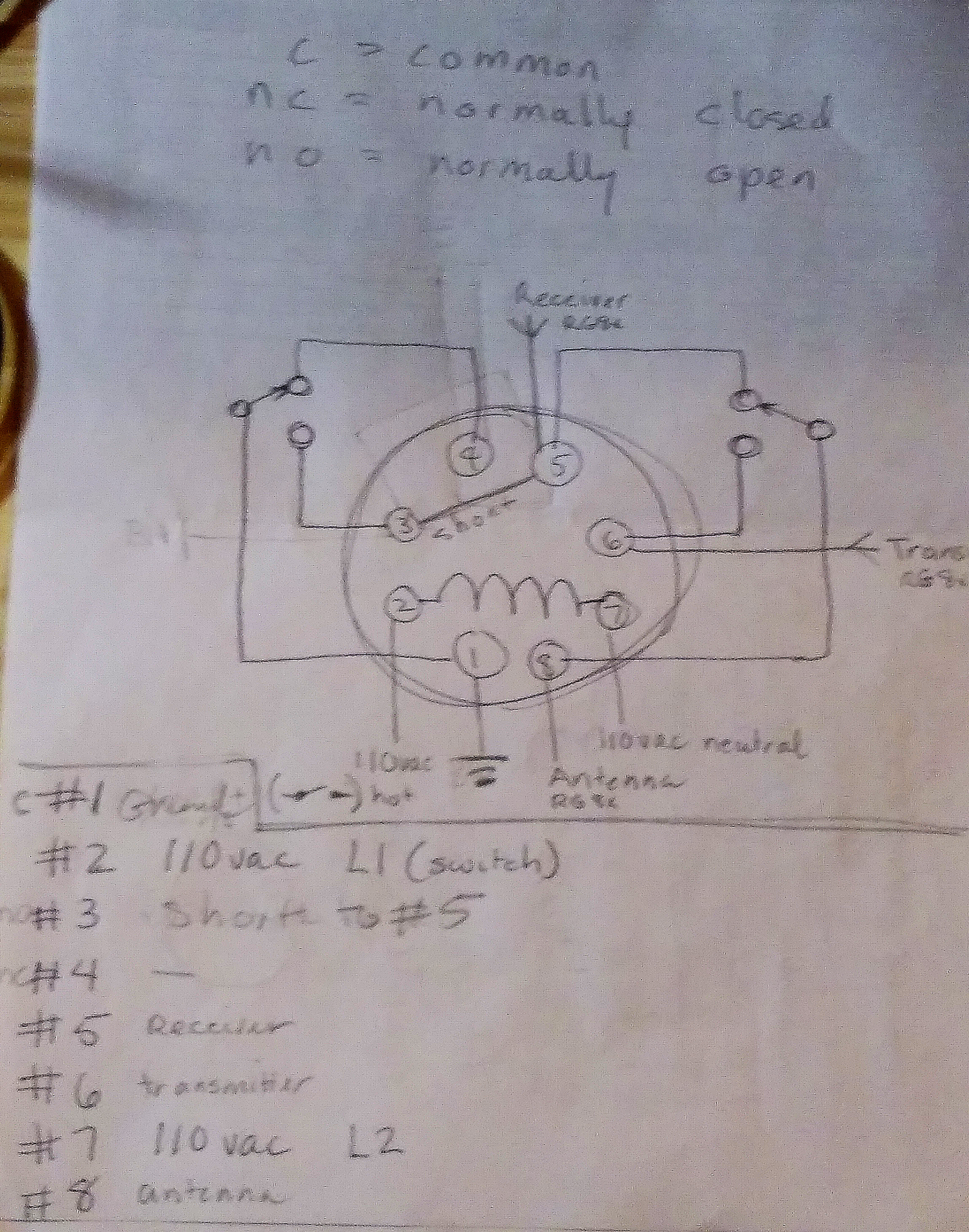 Things like 3 pole rotary switches and relays were somewhat of a mystery to me. So I sat down and figured them out. I mean they don't have time to go in-depth on everything on Ham Nation! There is a certain previous knowledge, prior expereience or Elmerly guidance assumed here. So I read up on things, got out my multimeter, tested some stuff and drew some diagrams of switches and relays. And later came to find out these were the least of my challenges. Getting the antenna to switch from receive to transmit was a sinch compared to finding out where that dadgum humming in the audio is cominng from!
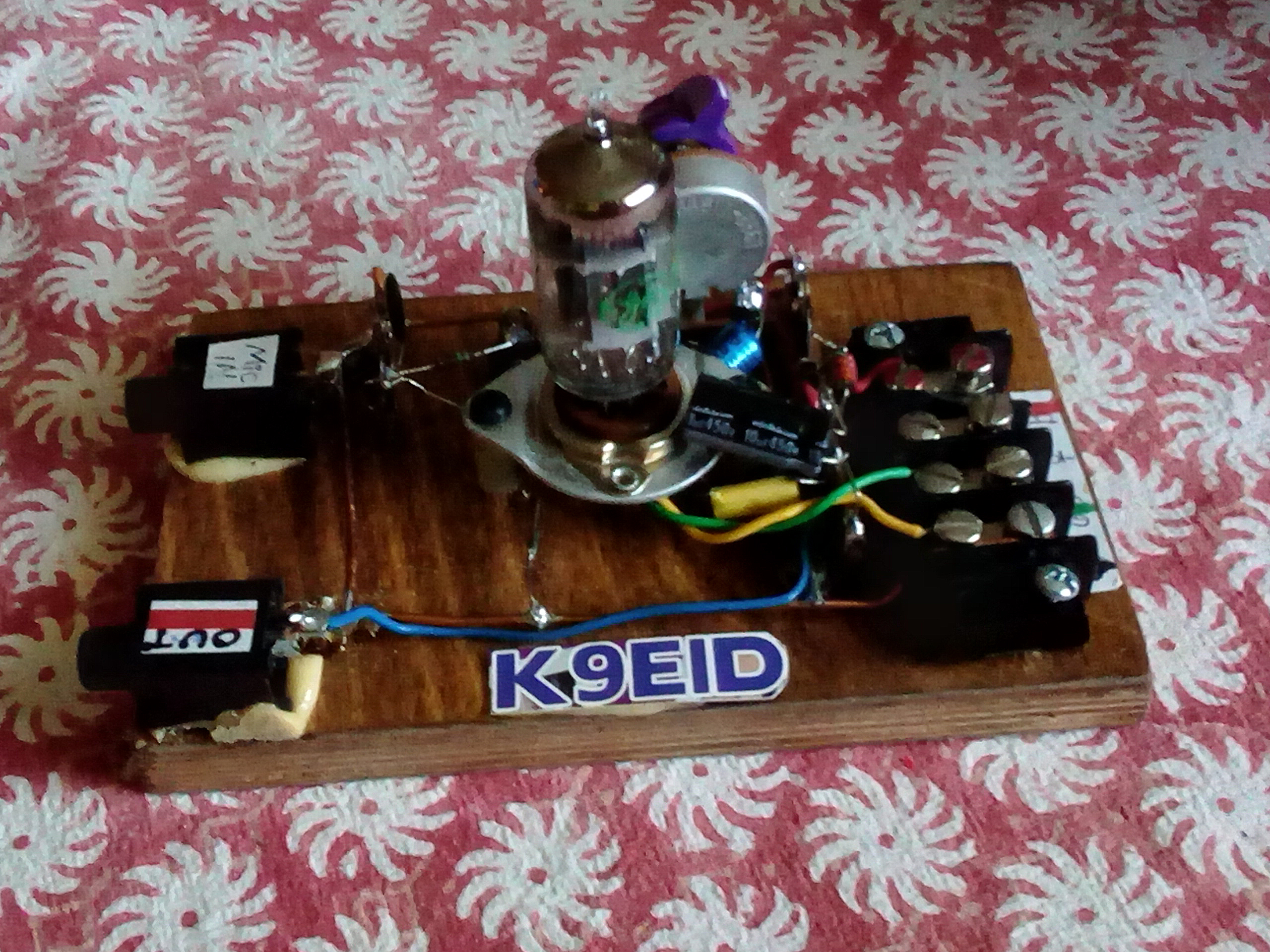 I'm not complaining at all. This is real life. This really is building a radio from scratch. And despite all the things I've messed up on (Ask Bob!), I'm most embarrassed about what this simple little "junk drawer" project has set me back. I'd say it's as much as that FT2DR I bought last December. In fact I just bought the last three pine board parts to the tune of $51! And if this thing works, it won't do nearly what that Yaesu HT can do, but the value inherent in the process - heretofore and yet to come - has been, and will be, immeasurable. Just that phone call from Bob Heil is worth more than anything I've spent building his project. He is a jewel in the audio, electronics and ham radio universes, an example of what passion, perseverence and a great attitude can really do. I'm glad to know him. In fact I will stop here and say he loaned me his prototype of the preamp when I was tecing my power supply and using it as a sample of my work at a club meeting. It was an honor to have a piece of Bob Heil's work in residence for a few months!
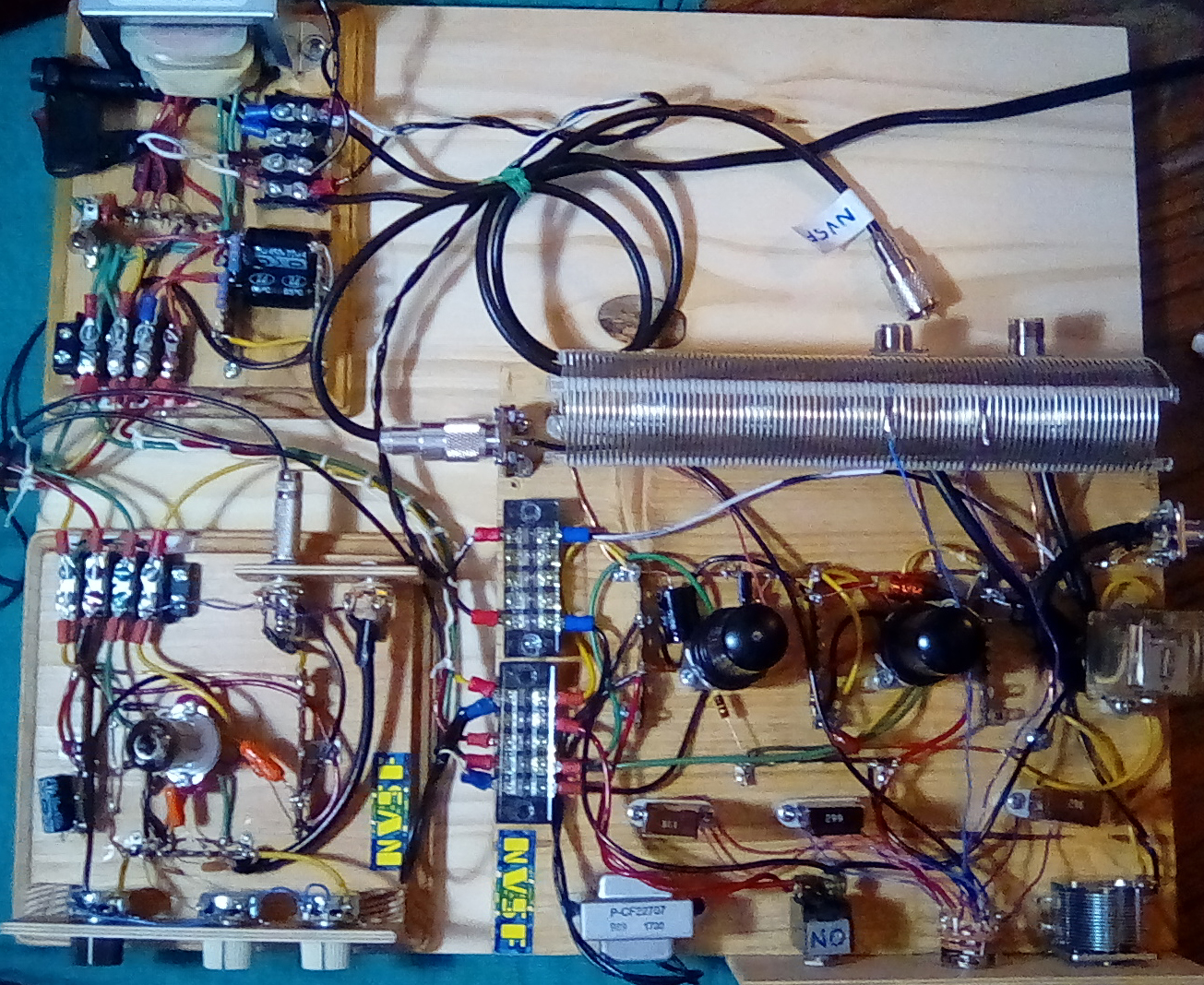 So here I am so close to completing the Pine Board Project. Now if this thing DOESN'T work when I turn it on, it's all the more valuable. fixing something is a much greater challenge than simply putting it together.
And maybe one day I'll sit down and figure out exactly what this 5 watt AM transmitter has cost me in dollars..., but probably not. One thing I have learned for sure: all those guys who collected all that junk for so many years were pretty smart to save it. And I dare say most of what I spent on the Pine Board Project went toward my growing understanding of how a radio works, as well as the beginnings of what is now my burgeoning junk drawer!
Home | The Rest of the Stories
Copyright © Virginia R. Smith